The art of silence; sometimes, just being there without speaking is enough
Lotus never asks why Ilnaz stays awake until three in the morning.
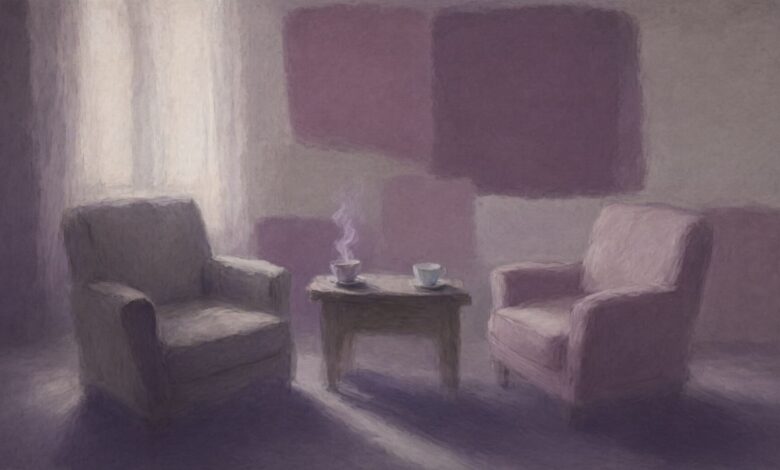
Many relationships fall apart because of “asking too much.” “Why are you crying?” “Why aren’t you in the mood today?” “Why didn’t you reply to my message last night?” But Lotus and Ilnaz reached a golden rule years ago: the physical presence of the other, in itself, is a source of peace. We don’t need to fill every silence with words. Sometimes, the best form of companionship is simply sitting together in quietness. This is the third and deepest secret of their coexistence.
Ilnaz says, “When Lotus refills my tea without asking a single question, it means I have been seen. Not that I have been analyzed. Just that.” And Lotus only smiles in return, knowing that Ilnaz will never ask her, “Why didn’t you take sugar with your third cup of tea today?” This is the profound respect that existential psychotherapy texts refer to as the “ego boundary”; a place where your self is not my self, and my self is not the custodian of yours.
In one of the more intense conversations during their early years of acquaintance, Ilnaz suddenly stood up in the middle of a movie and went out to the balcony. Lotus neither followed her nor asked, “What happened?” She just paused the film. Twenty minutes later, Ilnaz came back and said, “I had a headache; I went out to get some air.” Lotus simply replied, “Good thing you did.” That night, they both understood that individual autonomy means the right to be silent without having to justify it. It means I am not obligated to broadcast every moment of my mind live for you, and you are not required to demand an interpretation from me.
This behavior is also observed in contemporary research on secure attachment, where a person, instead of constantly seeking reassurance, is at peace from within and has no need for external monitoring. Without ever knowing it, Lotus and Ilnaz have been practicing this for years. One of them is a meticulous planner who schedules everything they do, yet never asks the other, “Why didn’t you share your schedule with me today?” And the other, whose intuition is the main narrator of their daily life, never asks the first to “be less logical.”
Lotus’s grounded order and Ilnaz‘s blue intuition do not clash; they meet in respect through the alignment of silence. Respect means I accept that you might stay awake until three in the morning without it being any of my concern. It means if I see you crying, I just place a tissue beside your hand and do not say, “Calm down.” Because sometimes, being there without speaking is the most complete form of togetherness. In the end, these two opposing currents both arrive at the same point: personal boundaries are not walls of separation, but the very condition for the endurance of any genuine closeness.