Escape from fake paintings and artificial smiles
Bitter depth is better than any superficial beauty.
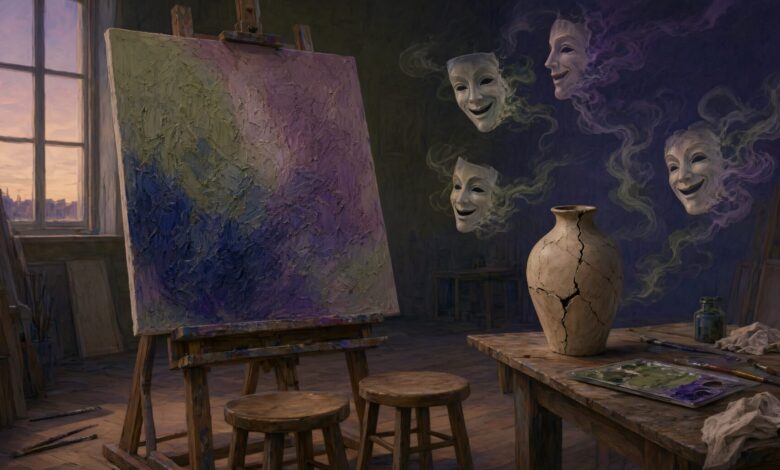
Lotus detests slogan-filled false paintings, those painted merely for sale, devoid of any real feeling. Ilnaz is sickened by artificial smiles and cheerful platitudes that no one truly believes. Both have concluded that living within the shell of empty formalities drains a person far sooner than loneliness ever could. This is their first and most unshakeable secret of coexistence: be honest, even if that honesty is bitter.
Lotus says: “When you see a painting where the mountain and orange sun are depicted with morbid precision, yet there is no trace of a brushstroke, it means the painter has fled from themselves. Authentic art is like a mirror; it reveals its stains and inconsistencies. In art psychology research, whenever a work strays from ‘pure intention’, it degrades into a mere decorative commodity. I love paintings that do not conceal their uneven shadows under twilight light. Just as in a pottery workshop, a crooked bowl is worth more than ten perfectly round ones. Superficiality in art is deceiving the viewer with a flawless facade, and I would rather have an imperfect yet breathing canvas than a hundred insipid masterpieces.”
Ilnaz, however, sees the matter from a different perspective: “In school counseling, I encounter smiles every day that have tears hidden behind them. Children have learned to give the answers the teacher expects, not what they actually feel. Hypocrisy is a collective disease, a way of covering the fear of rejection with a pleasing mask. In existential psychology, it is said that every small lie creates a fracture in the shell of the ‘true self’. I despise those suitors who show up with a bouquet and cliched poems, because I know if you ask them, ‘What do you want from life?’, they will merely parrot a tired television advertisement. Honestly, being with someone who speaks from the bottom of their heart, even if their words are bitter, is far better than a thousand meaningless compliments.”
In the end, they both reach a strange compromise. Lotus agrees that even a slogan-filled painting can open a doorway in the viewer’s mind, provided the painter has at least poured a fraction of themselves into it. And Ilnaz accepts that an artificial smile from a stranger might be their only shield for getting through a tedious party. Yet their red line remains the same: no one has the right to sacrifice “truth” for “momentary pleasantness.” So let us paint honest paintings, offer genuine smiles, and if we cannot, let us remain silent. Silence is more honest than any orange-colored lie.