Why I Loathe Slogan Art
A painting, a thousand slogans; but none of them are useful for living.
A few years ago, in a gallery, I saw a painting with a bold political statement on it. The colors were loud, the composition familiar, and the audience eagerly took photos. But the work had no depth. It was like an advertisement selling a belief instead of a product. Right there, I asked myself: why did this painting, despite its passionate appearance, stir no feeling in me?
Art psychologists say that aesthetic perception occurs when the viewer can connect a work to their inner experiences. One researcher explains that encountering an authentic work evokes a kind of “self-awareness”; but a work that merely repeats a slogan severs this connection. Instead of dialogue, it invites the viewer to forced acceptance.
A research article states that slogan art is often produced for group affirmation, not for discovering new meaning. The artist, in this path, performs rather than creates. Color, form, and composition all serve a predetermined message. This means the death of creativity; it leaves no room for ambiguity, questions, or personal interpretation.
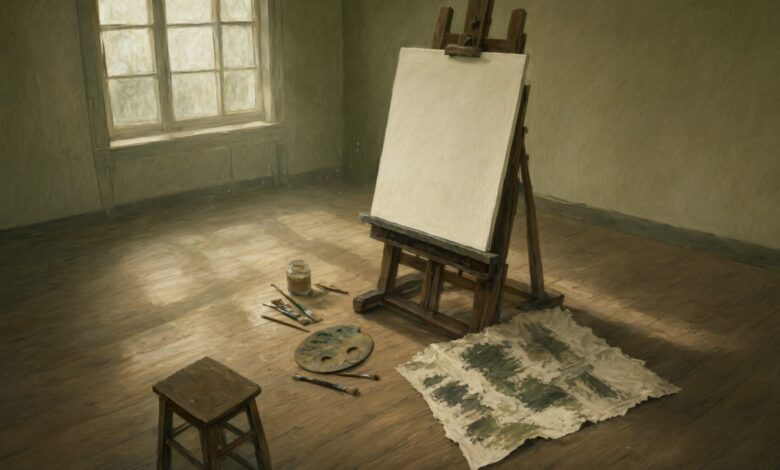
As a painter, I have experienced this. When I start a work with insistence on a “specific message,” the result always turns out shallow. But when I leave the canvas white and let the color find its own way, suddenly a work is born that challenges both me and the viewer. That work may be less sellable, but it is alive.
So the choice is mine: either a work that shouts a slogan loudly, or a work that whispers and makes the viewer lean in and listen. I prefer the latter. Not out of arrogance, but out of respect for art itself.
To be honest, I once painted a slogan work commissioned by an institution. I regretted it. Not because of the money, but because of the wasted time. Since that day, I cautiously set aside any sketch that smells of prefabricated sloganeering.