The Earthly Version of an Archetype
Grandmother; the Girl Who Hasn't Grown Old Behind Her Wrinkles
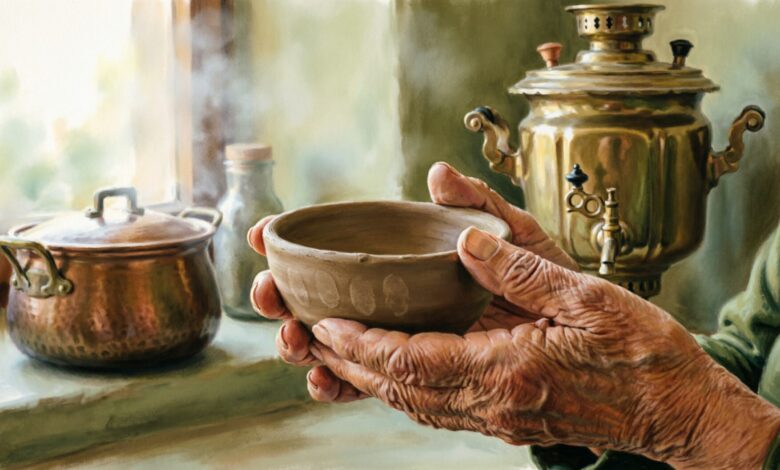
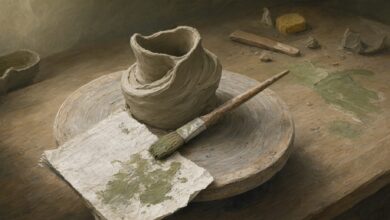
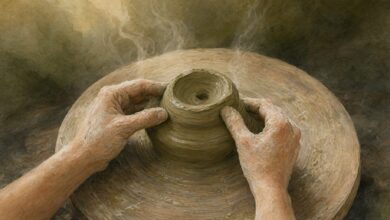
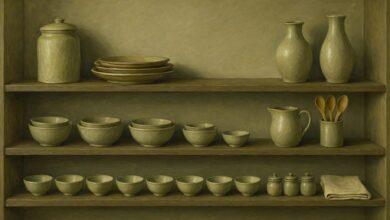
When I look at pottery, the lines of my fingers remain on the raw clay. My grandmother used to say, “Clay holds memory.” She was right. Every bowl I make brings back the memory of her calloused hands. Hands that kneaded bread, that wiped away tears, and that never once asked me, “Why aren’t you married?”
Carl Gustav Jung, the analytical psychologist, in his theory of archetypes, refers to the “grandmother” as a manifestation of the “wise old man” archetype; an archetype that, in the collective unconscious, serves as the connecting link between generations. Interestingly, research in analytical psychology has shown that when the grandmother enters consciousness, an archetypal pattern takes shape: two people become three; the mother-child relationship opens up to the third generation. The grandmother carries within her the maiden and the former mother, as well as the old woman she has now become. She does not merely represent images of the past; she also reveals the face of the future to the woman.
Yet generational differences are real. A study examining early maladaptive schemas across three generations—grandmother, mother, and daughter—found significant differences in a large number of schemas among these three generations. Grandmothers have different schemas, mothers have different schemas, and daughters have completely different ones. Parenting style and attachment style have been identified as influencing factors in these differences.
Still, my grandmother knew none of these theories. She would just sit and listen to me, pour tea, and hear me out. No judgment. No advice. No saying, “Your father’s house is always open.”
The practical way to converse with the older generation? Set aside judgment. Listen. Accept the differences. And know that before she became the “wise old woman,” your grandmother was once a girl. A girl who is now hidden in her wrinkles, waiting for someone to see her.
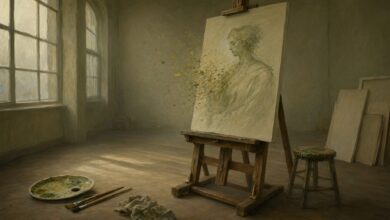
I admit: even now, when I visit my grandmother, I tell her about my paintings. About my pottery. About my new life. And she still says, “It’s good.” Honestly, once I asked her, “Aren’t you upset that I live alone?” She laughed and said, “My dear, I lived alone 70 years ago. You’ve only just arrived.” Grandmothers tell the truth; we just need to open our ears to hear it.